Where the water actually goes
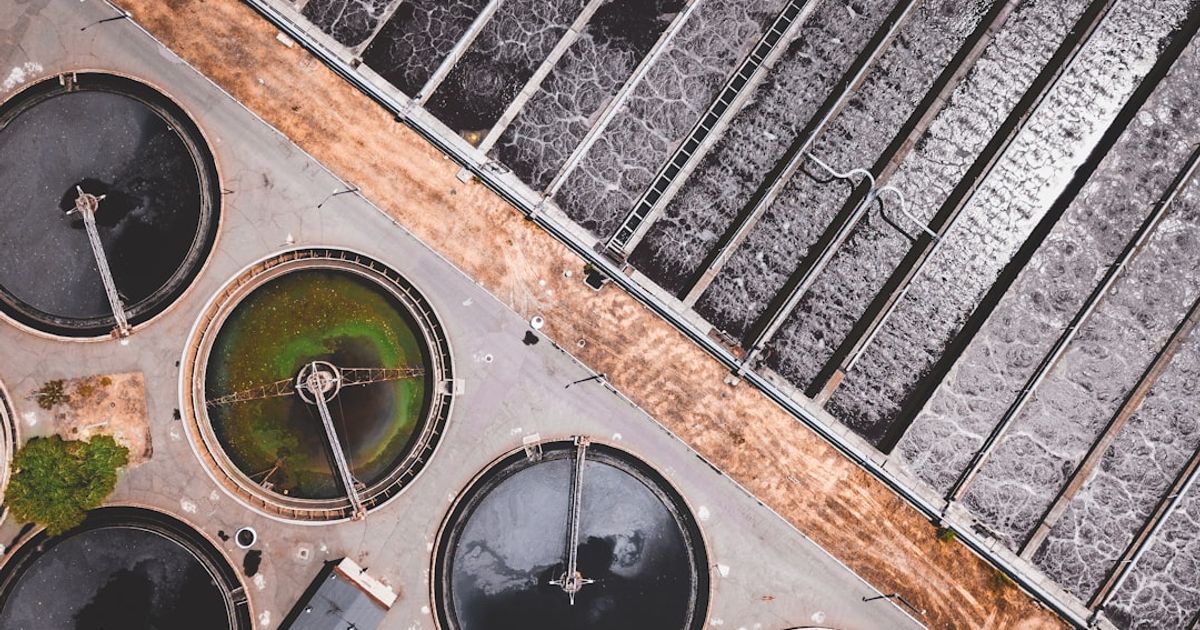
GPUs generate intense heat. A large share of data centers remove that heat through evaporative cooling: water absorbs the heat and leaves as vapor. Evaporated water isn't destroyed, but it is removed from the local watershed. That matters when the data center sits in a dry region, and a striking number do, because dry regions tend to have cheap land and cheap power.
That's the direct use. The indirect use is bigger and harder to see. Most electricity generation is itself water-hungry. Thermoelectric plants boil water for steam and draw more for cooling, so every kilowatt-hour a data center pulls from a fossil or nuclear grid carries embedded water consumption from the power plant upstream. Add the water used in fabricating the chips themselves. Semiconductor fabs are prodigious water users. The full chain looks like this: water to make the hardware, water to power it, water to cool it.
Why the numbers you've seen are all different
You may have encountered claims like "a ChatGPT conversation costs a bottle of water." Treat every such figure as an illustration, not a measurement. Published estimates vary widely because the honest answer depends on things outsiders can't see: which data center served the request, its cooling design, the local climate that day, the grid mix behind it, and how you spread the water cost of training across the model's lifetime of queries. Researchers doing this work carefully publish ranges, and the ranges are wide. The defensible summary: per-query water use is small, aggregate water use across billions of queries is large and growing, and it concentrates in specific places. That concentration is the real problem.
Concentration is the problem
Carbon is global. Water is local. A ton of CO2 does the same damage from anywhere, but a million gallons evaporated matters differently in a rain-soaked region versus a drought-stressed one. Data center siting decisions have repeatedly landed in water-stressed areas, and communities from the American Southwest to parts of Europe and Latin America have started pushing back on new builds. Some operators now publish water-usage effectiveness numbers, invest in reclaimed or non-potable sources, and site new capacity more carefully. Disclosure remains patchy and voluntary, and "water positive by 2030" pledges are doing a lot of unaudited work.
What this means for a product like ours
TailorFit doesn't run a data center. Our inference happens on our AI provider's infrastructure, inside cloud regions we don't choose at the granularity where water impact is decided. Our honest position mirrors our carbon one: we can't measure our water footprint, and we're skeptical of any company our size that claims it can. What we can do is shrink the upstream demand our product creates. We do that by routing small models to small tasks, caching aggressively, and treating tokens as a proxy for all of it: energy, carbon, and water alike, since every one of those costs scales with the compute we ask for.
When you evaluate AI vendors, the questions worth asking are where the compute physically runs, how it's cooled, whether water use is disclosed, and whether efficiency is treated as an engineering priority or a marketing page. The energy story finally gets scrutiny. The water story deserves the same, before the places providing it run short.